Swissbau Basel 2026 – Repair Instead of Replace as a Best Practice

Swissbau Basel 2026 – Repair Instead of Replace as a Best Practice

A post-event report by Dominic Duer, CEO of GLASSRESQ

Practical, hands-on trade fair presence by GLASSRESQ and SMARTRESQ

Swissbau 2026 in Basel was a complete success for GLASSRESQ and SMARTRESQ. Not because of flashy presentations or high-gloss staging, but because of substance. Because of real conversations. Because of visibly functioning craftsmanship. And because of a clear signal from the market: repairing instead of replacing is no longer a niche topic, but a serious solution for property owners, planners, contractors, and facility managers.

Our trade fair presence was deliberately designed to be practical. No abstract promises, no renderings, no theoretical sustainability claims. We demonstrated live what is possible. Glass, metal, wood, PVC. Scratches, sparks, etching damage, pressure marks, surface defects. Damage that occurs in everyday construction projects and often triggers reflexive replacement. This is exactly where we step in.

On-site repairs in action

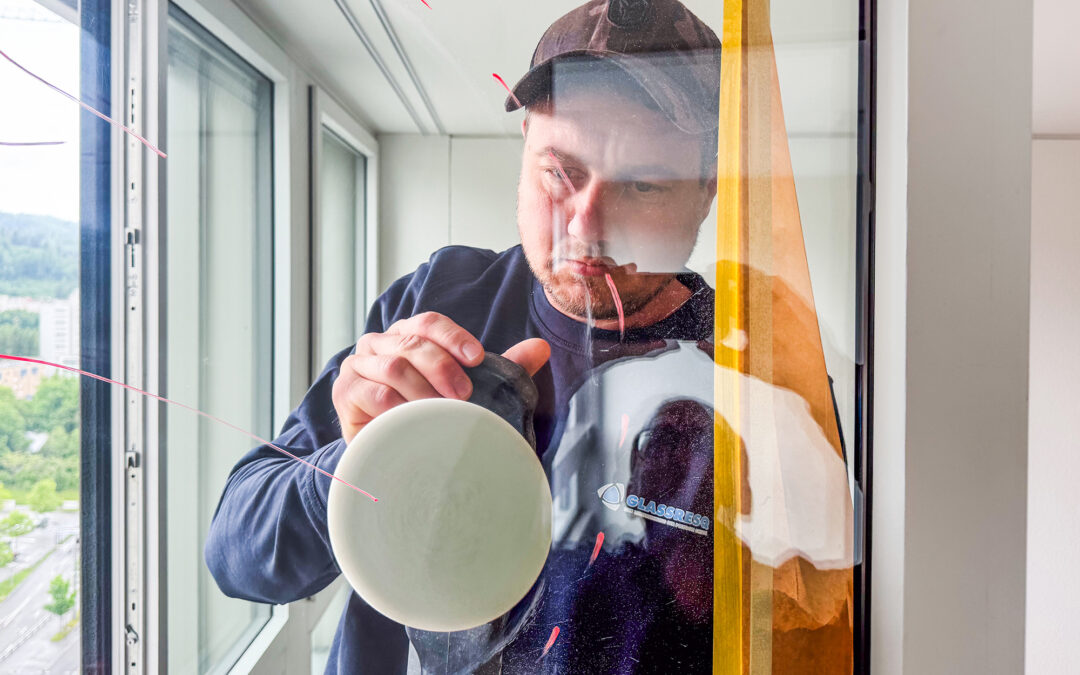
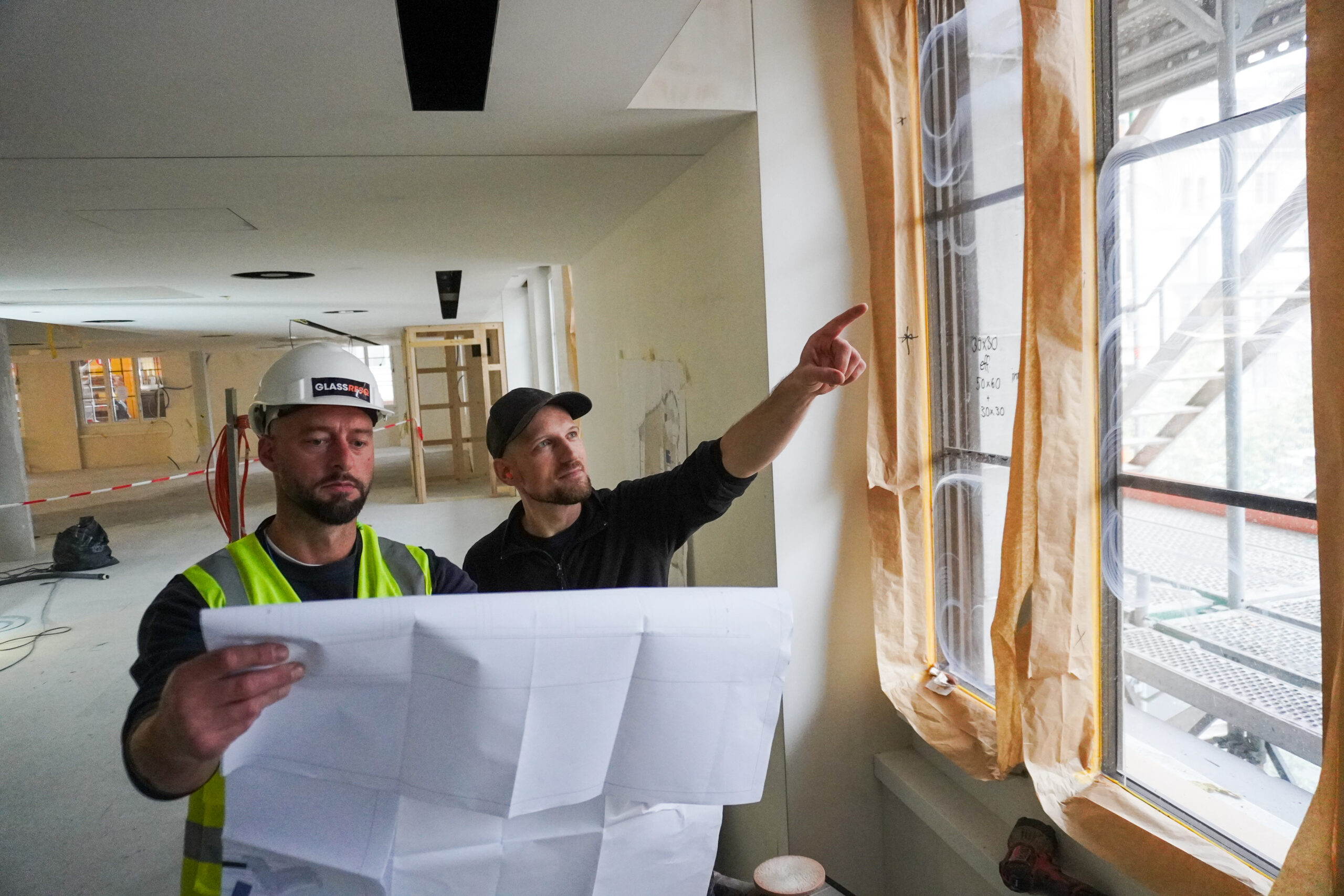
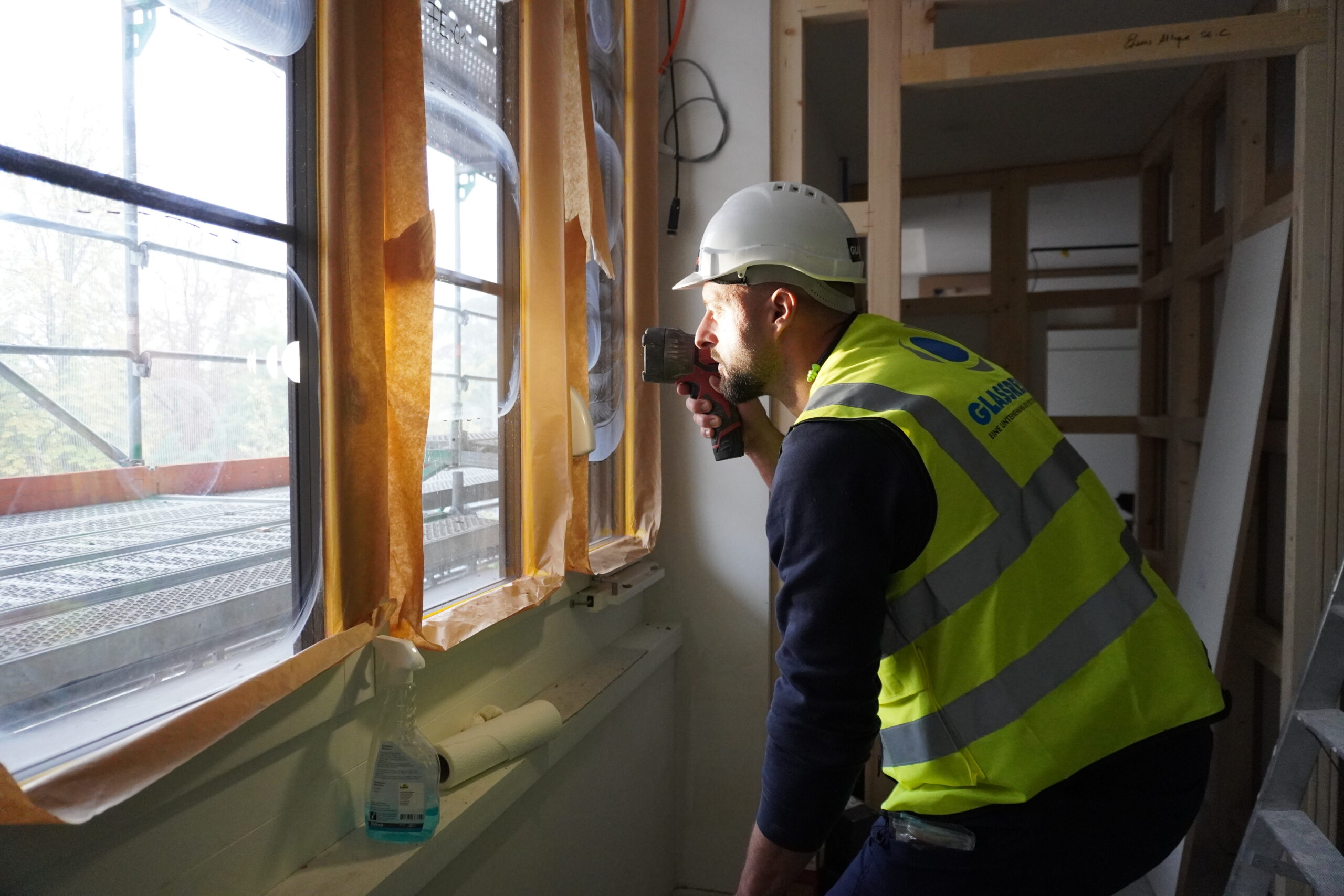
Throughout the entire trade fair, we carried out repairs directly on site. Visible. Understandable. No cuts. No tricks. Visitors were able to follow the complete process: from the damaged component to a technically and visually flawless result. The reactions were clear: surprise. Interest. Skepticism that turned into approval. Many conversations began with the question of whether it would really hold. They ended with concrete project examples and verifiable figures.


Visitor reactions and market response

What stood out in particular: the audience was prepared. Architects, construction managers, investors, facility managers. They no longer asked whether repairs were possible, but when they are more sensible than replacement. This shift is crucial. Cost-efficiency, time savings, and sustainability are no longer considered separately—they are interconnected.


GLASSRESQ and SMARTRESQ – Solutions for Existing Buildings

GLASSRESQ stands for industrial-level glass and surface restoration. Our methods are developed for real construction site conditions, not laboratory environments. Low-dust. Efficient. Reproducible. In many cases up to 90 percent cheaper than replacement. Above all: immediately available. No waiting for new parts, no supply chain delays, no downtime.

SMARTRESQ consistently complements this approach. Window and door profiles made of aluminum, steel, wood, or PVC can be restored without dismantling the frame. This is a decisive advantage, especially in existing buildings. Preservation instead of demolition. Repair instead of disposal. This approach is technically sophisticated and economically proven.

High visitor engagement and hands-on raffle

Interest in our booth was consistently high—not just at specific times, but throughout all trade fair days. Many visitors returned deliberately, brought colleagues, and asked detailed questions. This shows that the topic generated not only curiosity but genuine relevance. Particularly noticeable was the strong response from the sectors of building refurbishment, hospitality, public buildings, and high-end residential projects.

Another focus was our raffle, which we deliberately did not treat as a pure marketing tool. Participation numbers were high, and the feedback was concrete. The prizes have since been sent to the winners. What mattered most was not the incentive, but the exchange that resulted: contacts that endure, conversations that continue.

Sustainability, Cost-Efficiency, and Market Development

Swissbau reflects the industry. What is discussed there translates directly to the market. This year, it was clear that the concept of sustainability has gained more precision: less symbolism, more practical implementation. Fewer declarations of intent, more operational solutions. Restoration fits perfectly into this development. It saves resources, reduces CO₂, shortens construction times, and lowers costs. Not theoretical, but measurable.

As CEO, I see this development not as a trend, but as a necessary correction. The reflexive replacement of components is neither economically nor ecologically up to date. Repair is not a compromise, but a qualified technical decision. It requires know-how, experience, and a clear standard of quality. This is exactly what GLASSRESQ stands for.

Restoration Becomes the Standard

My personal conclusion from Swissbau 2026 is clear: the industry is further along than its reputation suggests. The willingness to explore new approaches is there. What is often missing are reliable examples. We provide these examples every day. On construction sites. In existing buildings. Under real conditions.

I am convinced that the focus will continue to shift. Repair instead of replacement will not only be accepted but expected—not as an exception, but as the standard. We will actively shape this development. With craftsmanship. With technology. With responsibility.

Swissbau 2026 has shown that this is the right path.

Many thanks to everyone who visited us.
Yours,
Dominic Duer

Assessment of Glass Scratches and Damage According to Swiss Standards

Assessment of Glass Scratches and Damage According to Swiss Standards

Inspection Conditions According to SIGAB and SIA 118/272 (Visual Assessment)

In Switzerland, glass surfaces are visually inspected according to clearly defined criteria to assess scratches or other damage. According to SIGAB Guideline 006 (“Visual Assessment of Glass in Construction”) and construction standards (including SIA 118), acceptance is carried out through optical visual inspection under specified conditions:

  • Viewing Distance:

Approximately 3 meters from the glass surface. If the room is smaller (e.g., narrow corridors or bathrooms), the available room depth is used as the distance.

  • Lighting Conditions:

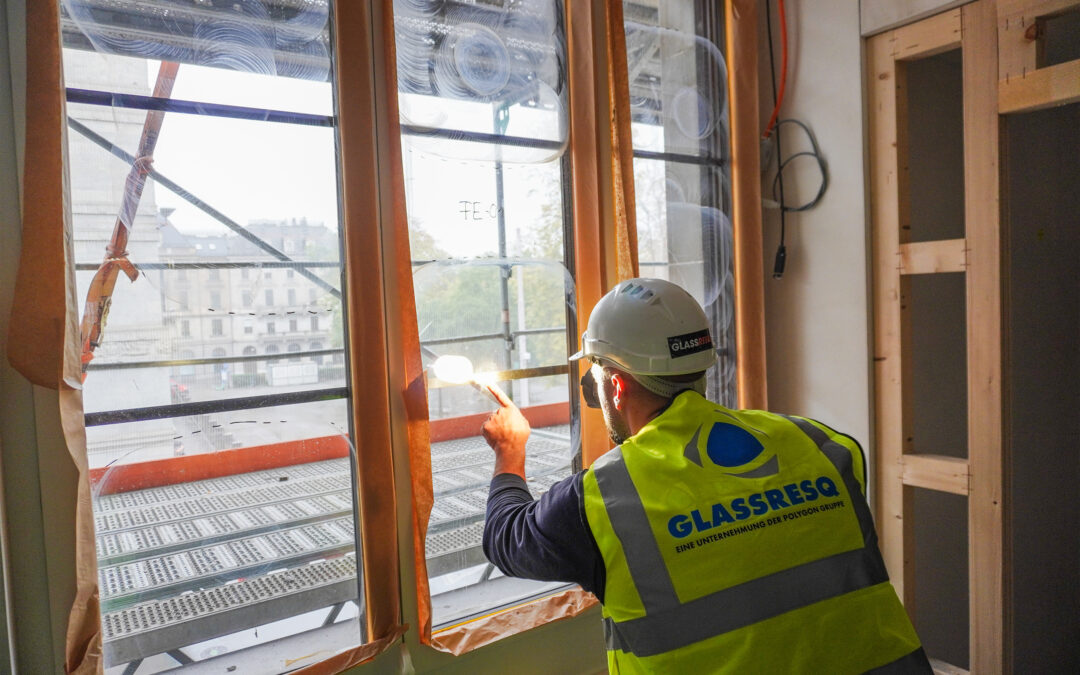
Diffuse daylight or normal room lighting; no direct sunlight or targeted illumination, especially no grazing light that artificially highlights defects. Ideally, the inspection takes place under overcast conditions (or uniform indoor lighting).

  • Viewing Angle:

Perpendicular to the glass surface from the main viewing side. For transparent glazing (e.g., partition walls), inspection should be conducted from both sides if possible. Small deviations of up to approximately 30° from the perpendicular are acceptable to view the panel under normal usage angles.

  • lCleanliness and Marking:

The glass panes must be clean; any potential defects must not be pre-marked to ensure an unbiased assessment.

These inspection conditions correspond to generally accepted rules. SIA Standard 118 (General Conditions for Construction Work) also specifies such a visual inspection. Small scratches or similar marks that are not visible from 3 meters under the above conditions are therefore not considered a defect.

Acceptance of glass work is thus based on normal usage viewing criteria: defects that are not visible to the observer at a typical distance under normal lighting are tolerated.

Scope: All Glass Surfaces (Including Interior)

The described assessment criteria apply to all construction-standard glass surfaces, whether interior or exterior. SIGAB Guideline 006 covers the full spectrum of construction glass, including window and façade glass, but also interior glazing such as mirrors (silver mirrors), shower enclosures, glass doors, or office partition walls. Thus, for example, a bathroom mirror or a glass shower wall is assessed according to the same principles as a façade panel. Of course, in smaller interior spaces, the inspection distance is adjusted according to the room size (see above). The key point is that the assessment is carried out under the usual viewing conditions for the intended use—so for mirrors, at a typical room distance, for glass partitions, from both sides, etc. Coatings or tints are also taken into account: inspection is always performed from the side from which the glass panel is primarily used or viewed.

For all types of glass and glass products (float glass, tempered safety glass, laminated glass, insulated glass, coated glass, etc.), the guideline defines specific tolerance values, but the basic visual inspection conditions remain the same. In short, wherever glass is used in construction—whether windows, door glazing, mirrors, or shower cabins—these Swiss assessment standards apply.

Criteria: Defect or Acceptable Cosmetic Flaw?

Whether a scratch or other defect is classified as damage depends on the size, number, and visibility of the flaw. The SIGAB standard distinguishes different types of defects and defines allowable tolerances depending on their severity and position on the pane (main viewing area vs. edge area). The following are the main guidelines for assessment:

Hairline Scratches (very fine scratches): Hairline scratches are microscopically fine scratches that cannot be felt with a fingernail and are only visible under direct grazing light. Such fine, isolated scratches are generally considered acceptable as long as they do not occur frequently and remain practically invisible under normal inspection conditions (3 m, diffuse light). They usually do not constitute damage and are considered optically negligible.

Medium-Intensity Scratches: These are scratches that can just be felt with a fingernail and are noticeable during standard inspection. Individual medium scratches are permissible up to a limited length. In the main area of a pane, for example, single scratches of this type may only be a few centimeters long, while at the edge they may be slightly longer before being considered a defect. Furthermore, the total length of all scratches in a field must not exceed certain limits. If multiple medium scratches are present, their lengths are added and collectively limited (slightly more tolerance on larger panes than smaller ones). In simple terms: short, isolated medium scratches may be acceptable, but if they accumulate or become longer, they are considered damage.

Deep or Severe Scratches: Scratches of severe intensity are clearly noticeable, may have chipped edges, and are immediately visible from any angle. Such scratches are rarely tolerated. Even a single deep scratch that is visible to the naked eye under diffuse light generally constitutes an unacceptable defect. The standard may allow very short lengths (e.g., < 2–3 cm) in exceptional cases. In practice, a coarse scratch that cuts into the glass or shows white streaks is clearly considered damage and must be remedied (e.g., by polishing or replacing the pane).

Point Defects (Inclusions, Splashes, Burn Marks): This category includes small dots, bubbles, or spots in the glass. They may originate from production (e.g., tiny air bubbles, inclusions) or occur on-site, for example, paint splashes or metal particles burned into the surface by cutting or grinding work. Very small points up to approximately 0.5 mm are practically unlimited, as they are hardly noticeable to the naked eye. Individual points around 1 mm are normally not considered defects if they remain isolated (no more than 3–4 in a confined area). Larger points of approximately 2 mm in diameter may occur only in small numbers in the main viewing area (e.g., maximum of 3 on small panes). Anything above this, especially points >3 mm, is not permitted in the main viewing area and would be considered damage. A burn mark from cutting or grinding work (welding or grinding sparks burned into the glass) usually produces a dark, rough spot. Such splashes can be noticeable even from 3 m away, as they reflect light differently. In practice, visible burn marks are not tolerated, as they can irreversibly damage the glass. Often, such marks can be completely removed by polishing.

Edge Damage (Glass Chips): This refers to small chips at the edge of the glass, often crescent-shaped (“shells”). These edge chips may occur during cutting or due to an impact on the edge. In the concealed edge area of glazing (the rebate that later sits in the frame), small, shallow chips are usually acceptable as long as structural integrity is not affected. However, if a chip is in the visible area of the pane (outside the frame coverage), it is treated like a point defect. Smaller chips may fall within the tolerances mentioned above for points, but large or prominent “shells” in the visible area constitute a defect and are not permissible. A clearly visible break at the edge of the free glass surface is therefore considered damage and would be noted, for example, during construction acceptance.

Summary for Practical Use:

The key factor is whether a scratch or spot is noticeable under normal viewing conditions. According to Swiss standards, glass is considered flawless if any imperfections are only visible when deliberately searched for under unfavorable lighting. Not every fine scratch is therefore considered damage. In particular, the smallest scratches or surface marks that are not visible from a distance of 3 meters under diffuse light are not considered defects. Customers should be informed that an absolutely flawless glass surface is rarely realistic in construction practice; minimal points or hairline scratches can occur but remain within the tolerance range of the standard. Damage, on the other hand, includes all scratches and defects that are clearly visible and exceed the defined tolerances. In such cases, there is a basis for a complaint, and the pane must either be remedied (e.g., professionally polished) or, if the impairment is too severe, replaced.

This clear guideline according to SIGAB and SIA ensures that both craftsmen and customers have a uniform basis for assessing glass defects and can objectively determine whether a defect is repairable or an acceptable cosmetic feature.

Sources: The above information is based on SIGAB Guideline 006 “Visual Assessment of Glass in Construction” (Edition 2015/2024), the Swiss standards (SIA 118 and SIA 331), and commonly used industry tolerances. These guidelines are recommended by Swiss glass associations and manufacturers (e.g., Flachglas Schweiz, Glas Trösch) and are explicitly mentioned in the general terms and conditions of many window manufacturers. They serve as a recognized basis to evaluate glass surfaces fairly and consistently, and to clearly communicate to customers when a scratch constitutes actual damage and when it does not.

Types of Glass Damage – An Overview

Glass can be damaged in various ways, for example by mechanical impact, chemical substances, or sudden temperature changes. Depending on the cause, different types of damage may occur: fine surface scratches, matte etching, or even cracks and splits in the glass. For an initial assessment, it is important to know these common types of glass damage and be able to distinguish between them.

Our PDF „Types of Glass Damage provides a clear reference guide. It explains the most common types of damage, their typical characteristics, and causes. This makes it easier to identify whether your glass damage is a superficial scratch, chemical etching, or a deeper crack, and to classify the damage accordingly.

Do you have questions or would you like an assessment of your glass damage? Simply call us or use our contact form. You can even upload a photo of your glass.
We will respond quickly and reliably!

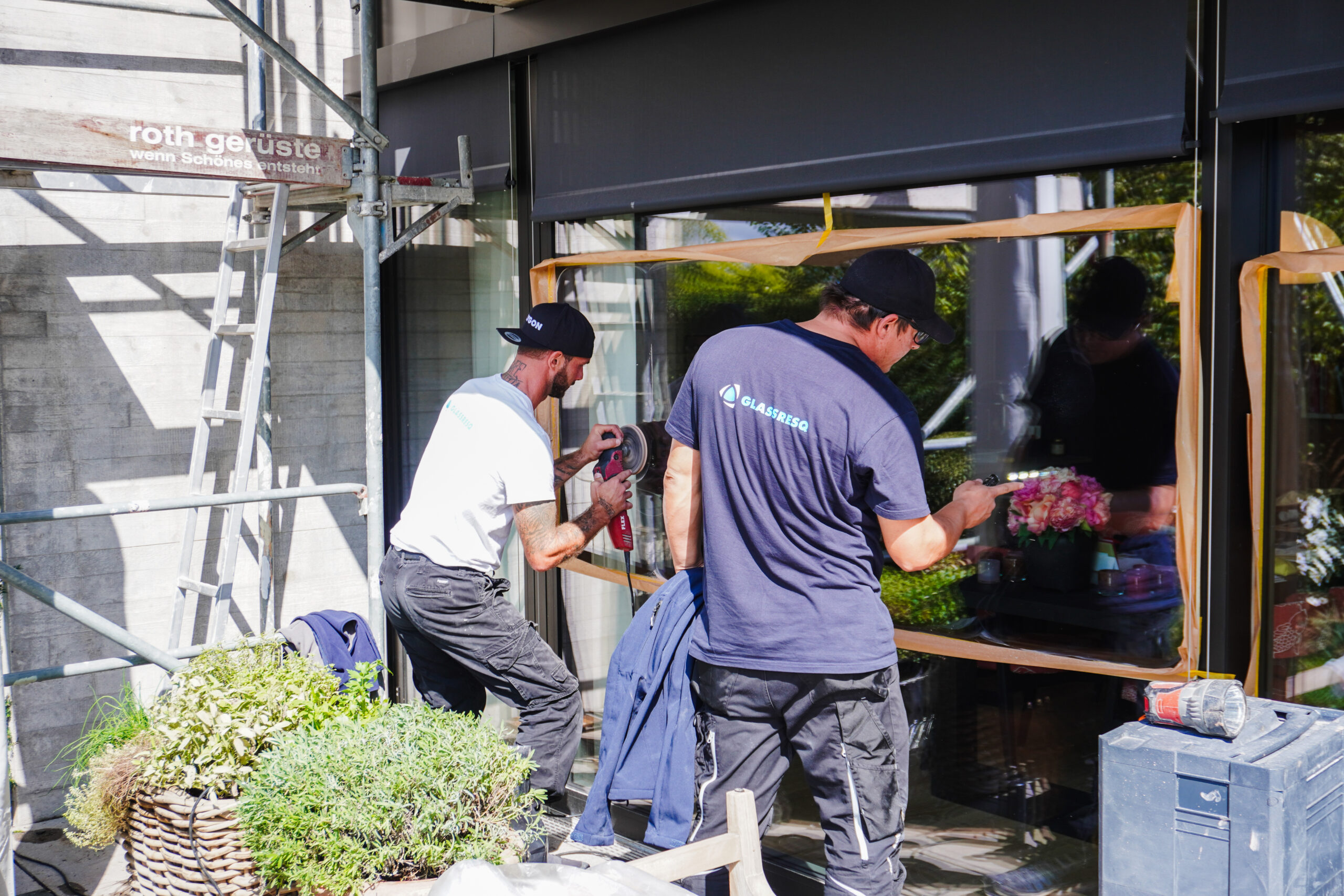
Glass scratches on large window fronts? No problem!

Glass scratches on large window fronts? No problem!

Scratches on large window surfaces are not only unsightly – they also impair your view. But don’t worry, GLASSRESQ has the solution!


Our solution:


  • Scratches on large window surfaces removed without a trace

  • No need for expensive replacement glazing

  • Fast, clean & sustainable

  • Why replace when restoration is more eco-friendly and cost-effective?

  • Every repaired window saves CO₂ and resources – for a sustainable future!


And the best part? Your view of the terrace is once again clear and unobstructed!

Send us a DM and get your free consultation today!

For more info, reach us at +41 44 577 60 70 or visit our website: www.glassresq.com

Save & share for anyone dealing with window damage at home!