How 50 scratched glass panels almost prevented the final construction handover

How 50 scratched glass panels almost prevented the final construction handover

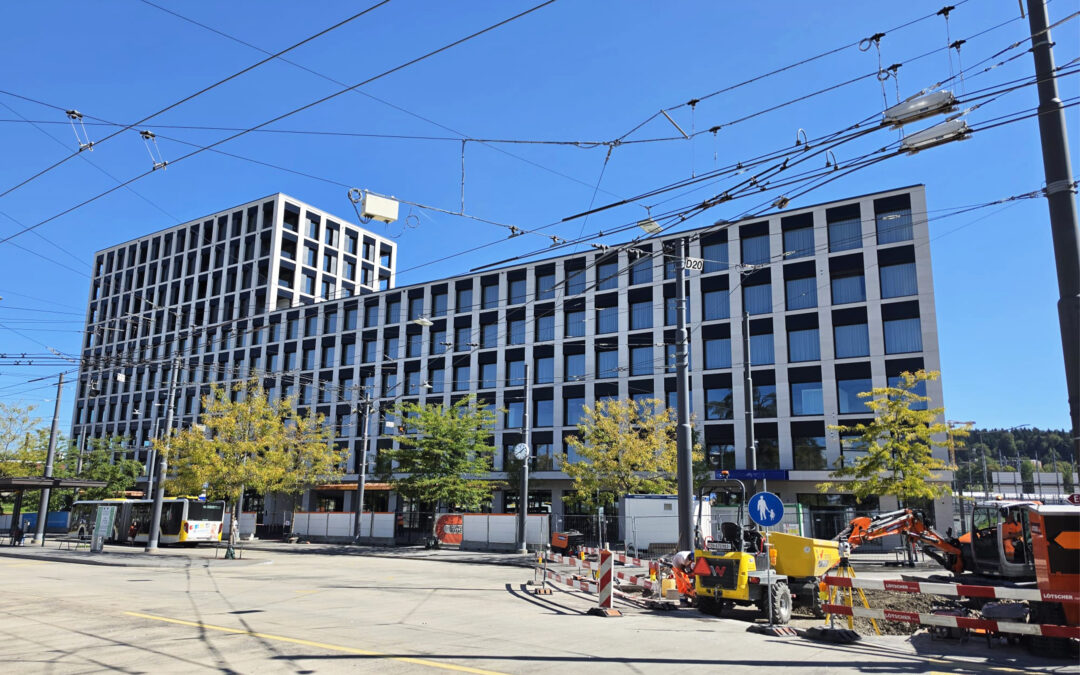
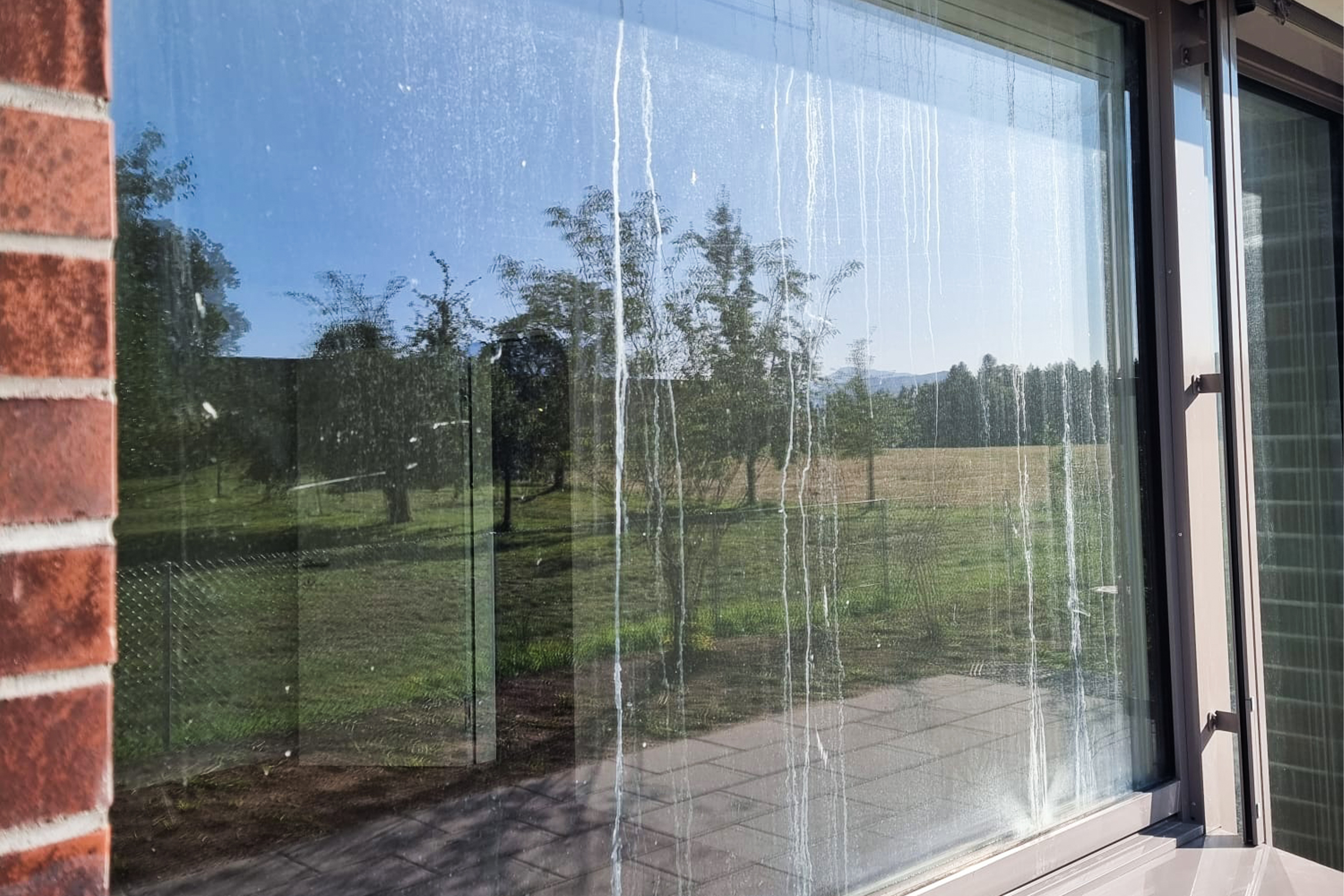
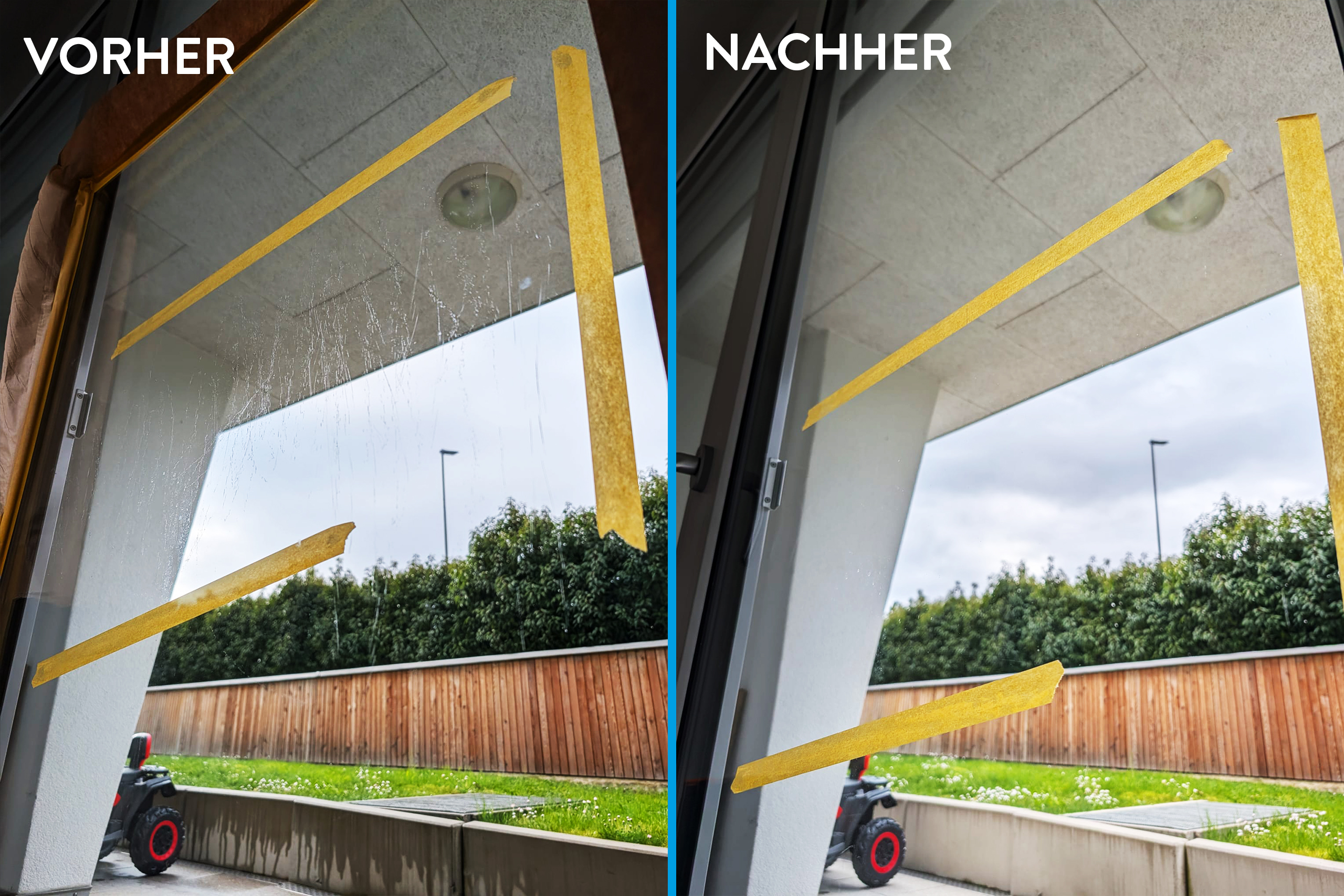
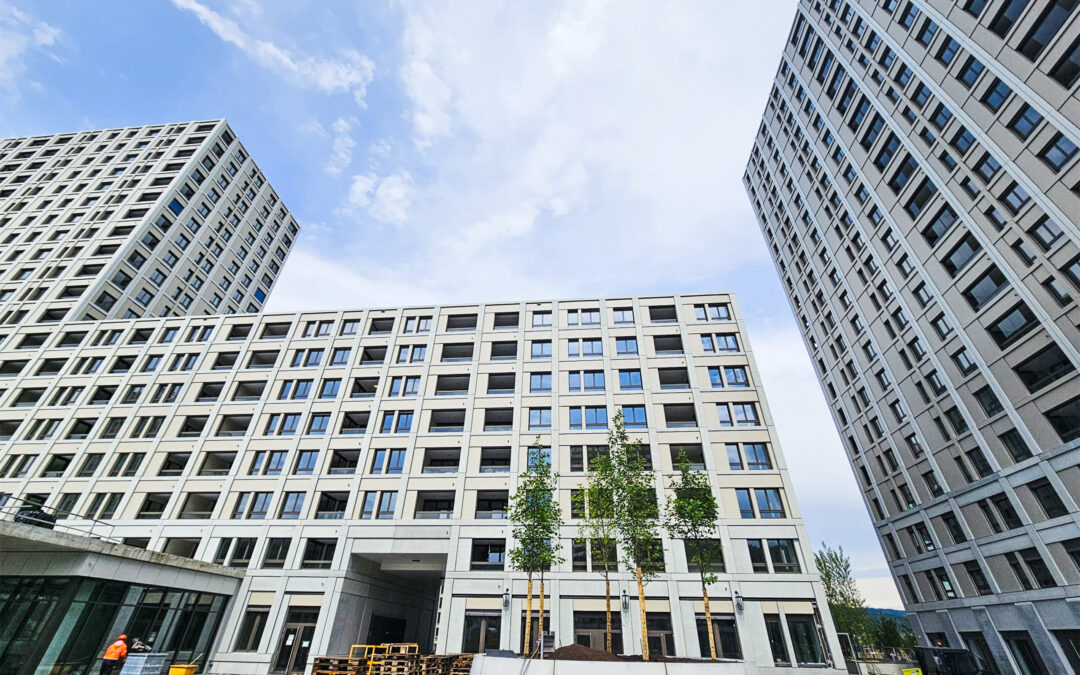
It is every project manager’s worst nightmare: the residential development is completed, the landscaping is in full bloom, and the future owners have already booked their moving trucks. But during the final cleaning, disaster strikes. Due to dirty squeegees and improper handling, more than 50 large-format sliding glass doors in a residential complex in central Switzerland were severely scratched. In the low evening sun, the glass surfaces looked as if they had been sanded with abrasive paper.

A full glass replacement would have resulted in six-figure costs, required crane operations over newly finished gardens, and—most critically—caused a delivery delay of three months. Contractual penalties and reputational damage were almost impossible to quantify. In this critical situation, Polygon Smart Repair under the GLASSRESQ brand was called in.

The GLASSRESQ deployment plan: where logistics meets craftsmanship

From our headquarters in Wädenswil, we coordinated three specialized teams within 24 hours. The challenge was not only the sheer surface area but also the extreme time pressure. We worked in a rotational system: while the first apartments were already being restored, final inspections could already begin in the rear sections of the development.

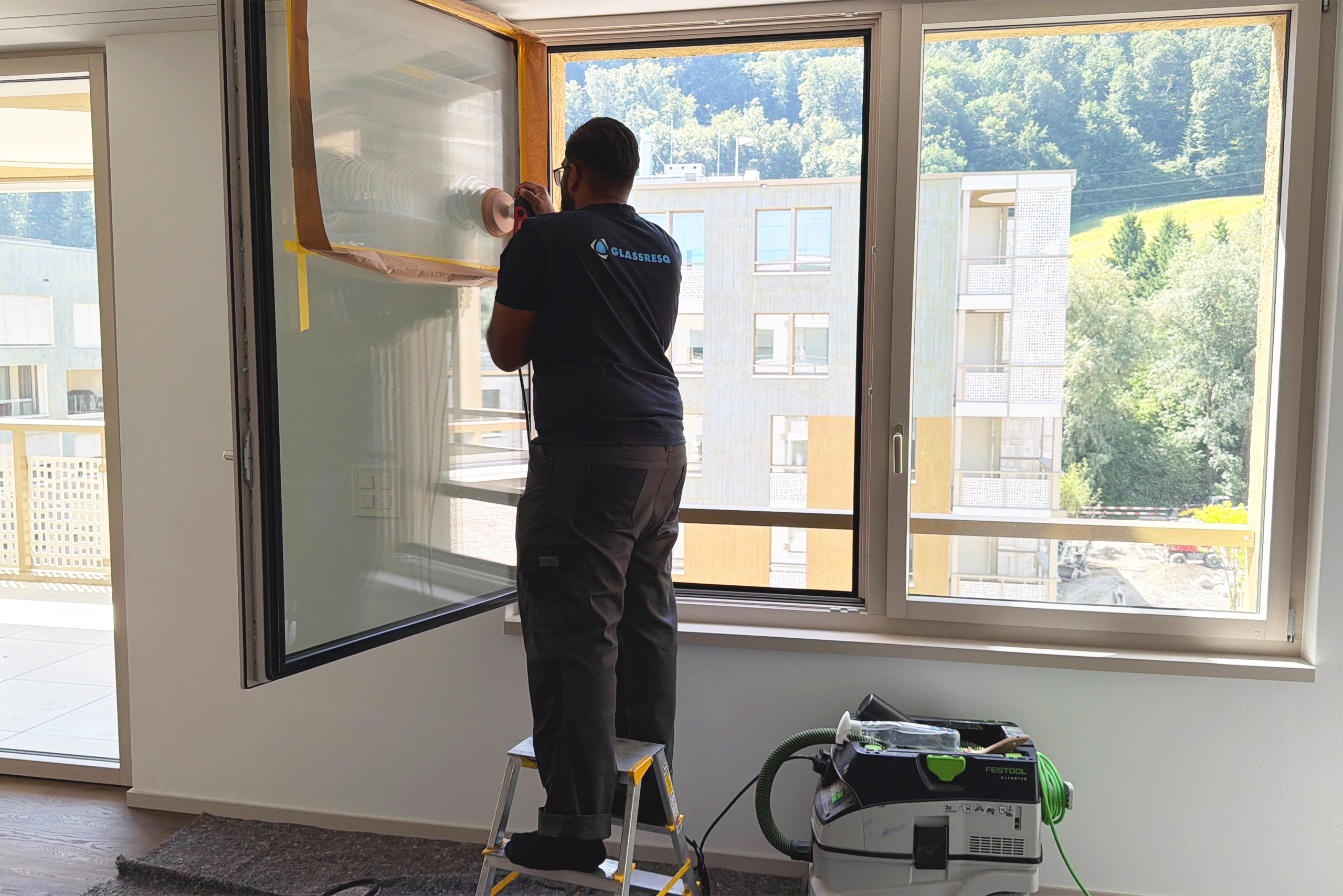
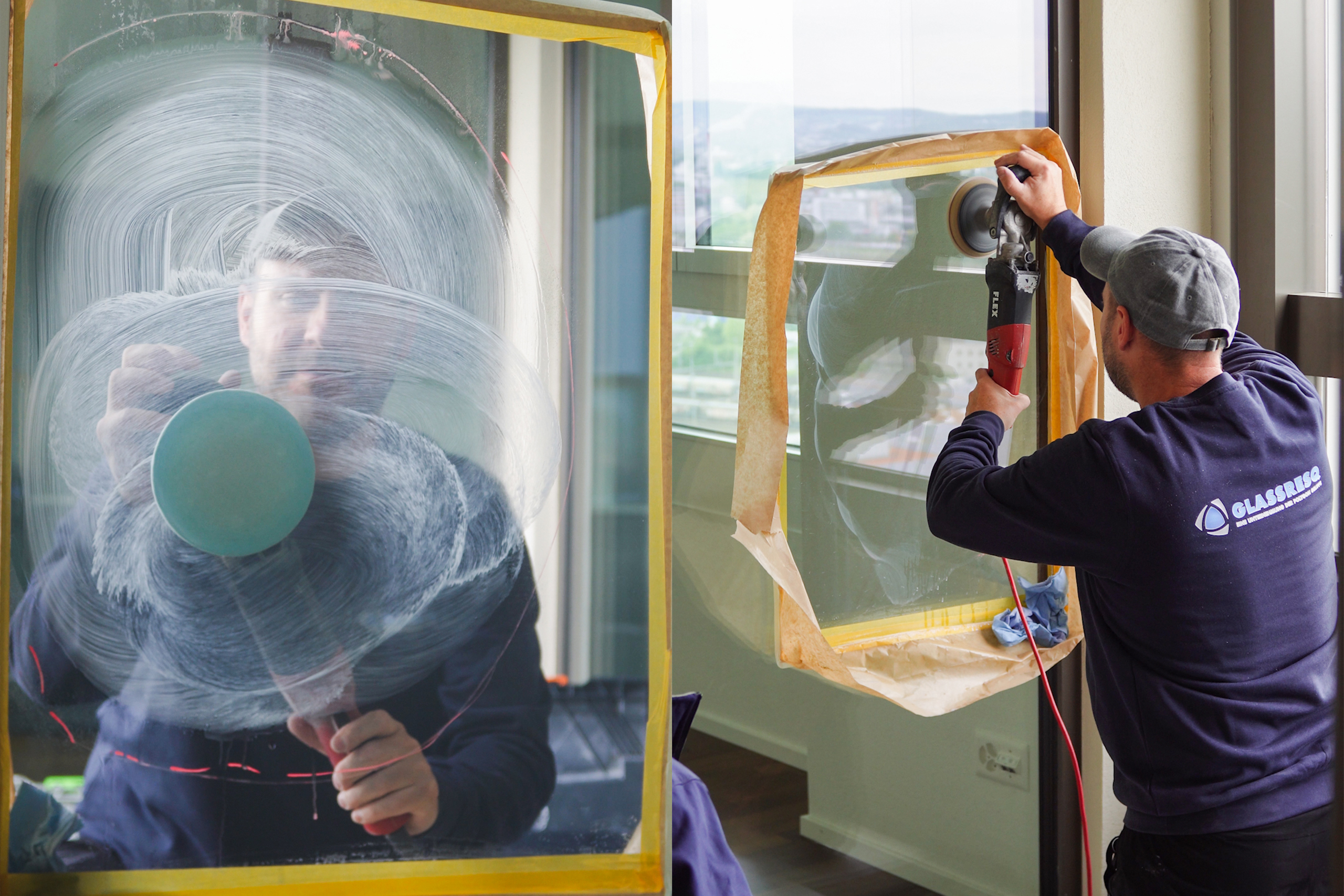
Glaspolitur durch GLASSRESQ an Hebeschiebetüren auf einer Wohnbaustelle

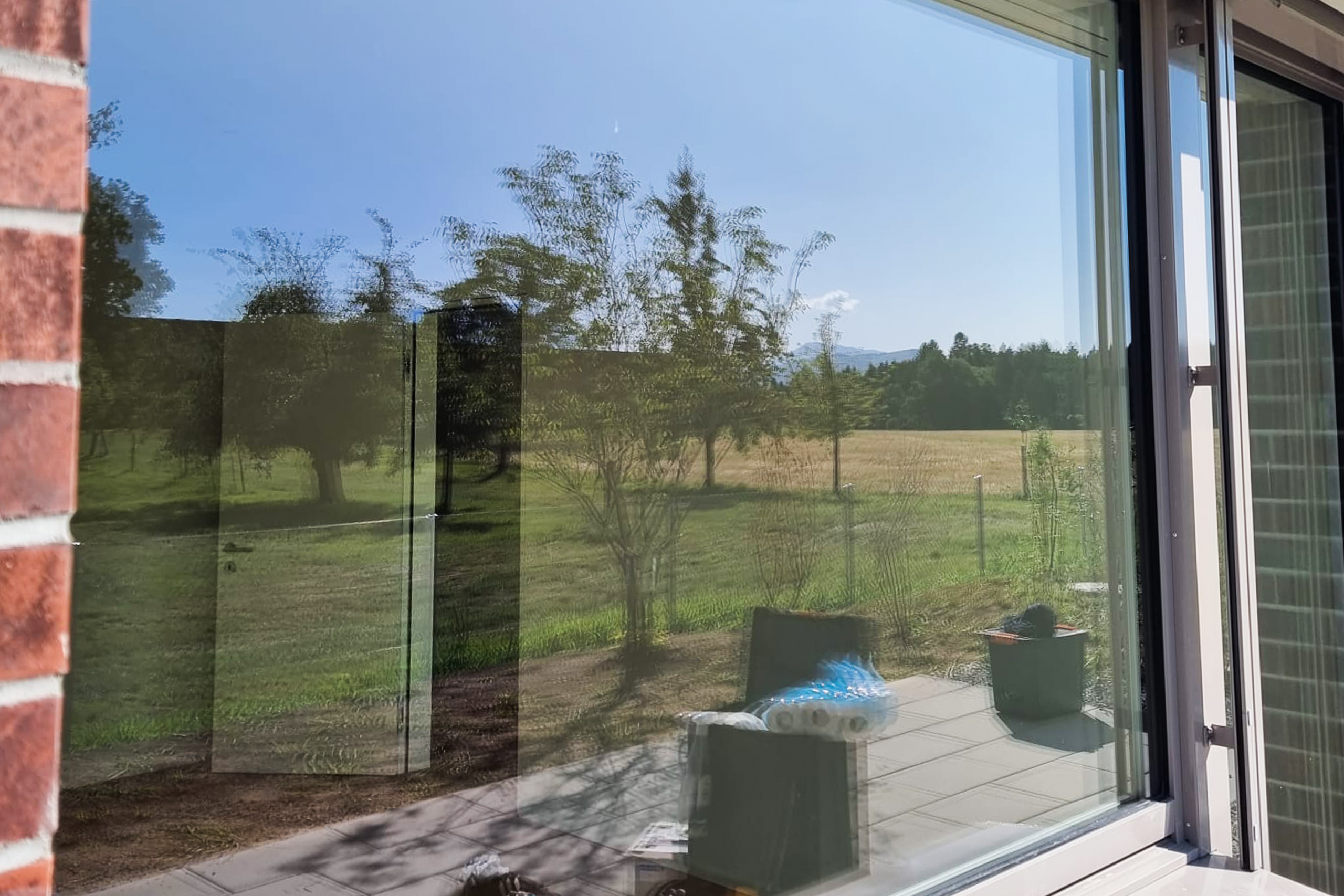
Thanks to our mobile glass polishing units, we were able to remove the scratches directly on the installed glazing. Our technology ensures that no material is removed, preventing any impact on structural integrity or optical clarity. After the restoration, each individual pane was jointly inspected and approved by our specialists and the site manager.

Key figures that speak for themselves: cost and environmental impact

The direct comparison was clear:

  • Time: restoration completed in 8 working days instead of a 12-week waiting period for replacement glass.

  • Costs: savings of around 75% compared to full replacement, including logistics.

  • Environment: over 4 tonnes of glass did not need to be produced, transported, or disposed of. In an industry increasingly focused on reducing its CO₂ footprint, this is a decisive advantage.

Conclusion: ensuring reliability for large-scale construction projects

This project has once again demonstrated that glass surface restoration is not a makeshift solution, but a highly precise craft capable of saving major construction projects. At Polygon, we are proud to act as a reliable partner across Switzerland for general contractors and architects.

Are you facing a similar challenge in a large-scale project? Do not waste time searching for replacement glass. Request our reference list or have the damage assessed directly on site. We will find the solution to ensure a timely project handover.

Contact the specialists at GLASSRESQ – we restore your glass.

Limescale, Cement, and Etching: When Glass Loses Its Shine

Limescale, Cement, and Etching: When Glass Loses Its Shine

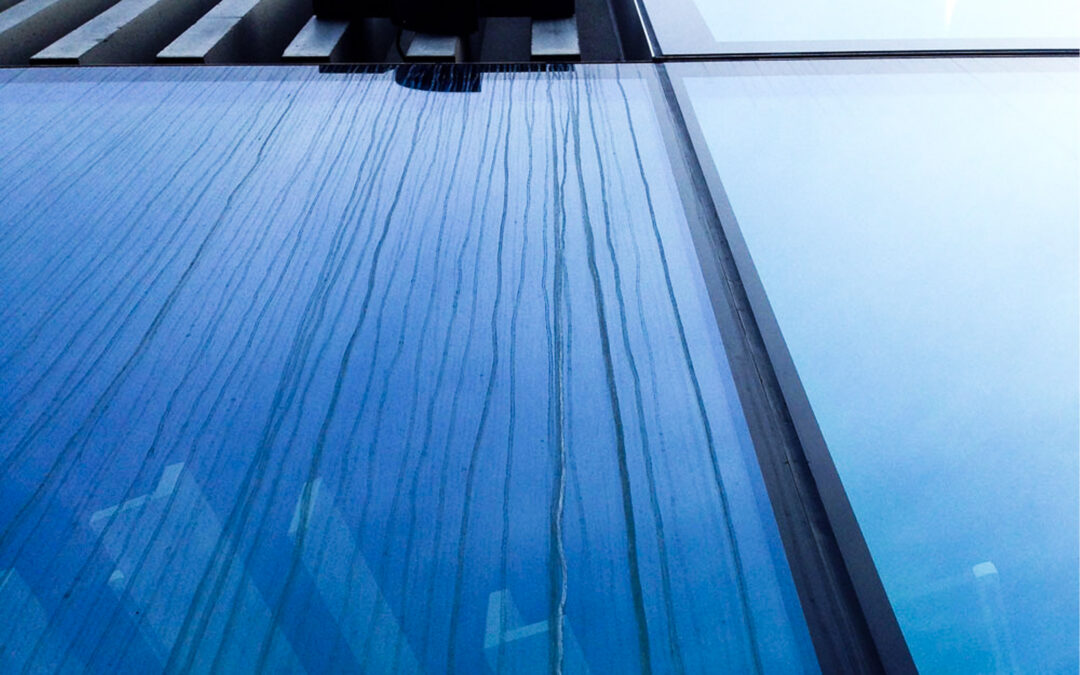
It is a gradual process, or sometimes the result of a single downpour on a construction site: white hazes, dull spots, or rainbow colored streaks cloud the view. This occurs especially often when rainwater runs over fresh concrete or plaster and flows as highly alkaline “cement water” across the glass panes. Once this liquid dries, a chemical reaction occurs on the glass surface, etching the pane.

Even in existing buildings, for example in properties near lakes or in areas with very hard water, deposits can become so entrenched that conventional window cleaners fail miserably. The glass appears “blind” and neglected, significantly reducing the value of a property.

The Misconception: “You Just Need to Clean It Properly”

Many property owners and cleaning companies try to tackle these stains with aggressive descalers or abrasive sponges.
But beware: glass is hard, yet chemically reactive. The wrong acids can permanently damage the surface, and mechanical scrubbing can create tiny micro-scratches that leave the glass looking dull.

At Polygon Smart Repair, we step in where traditional cleaning stops. Under our brand GLASSRESQ, we specialize in reversing these chemical changes in glass.

The GLASSRESQ Solution: Restoration at the Molecular Level

Our experts in Wädenswil and at our locations across Switzerland use a multi-step process:

  • Analysis: We determine whether the issue is a deposit (limescale/cement) or already a structural change (etching).
  • Neutralization: Chemical residues are professionally neutralized.
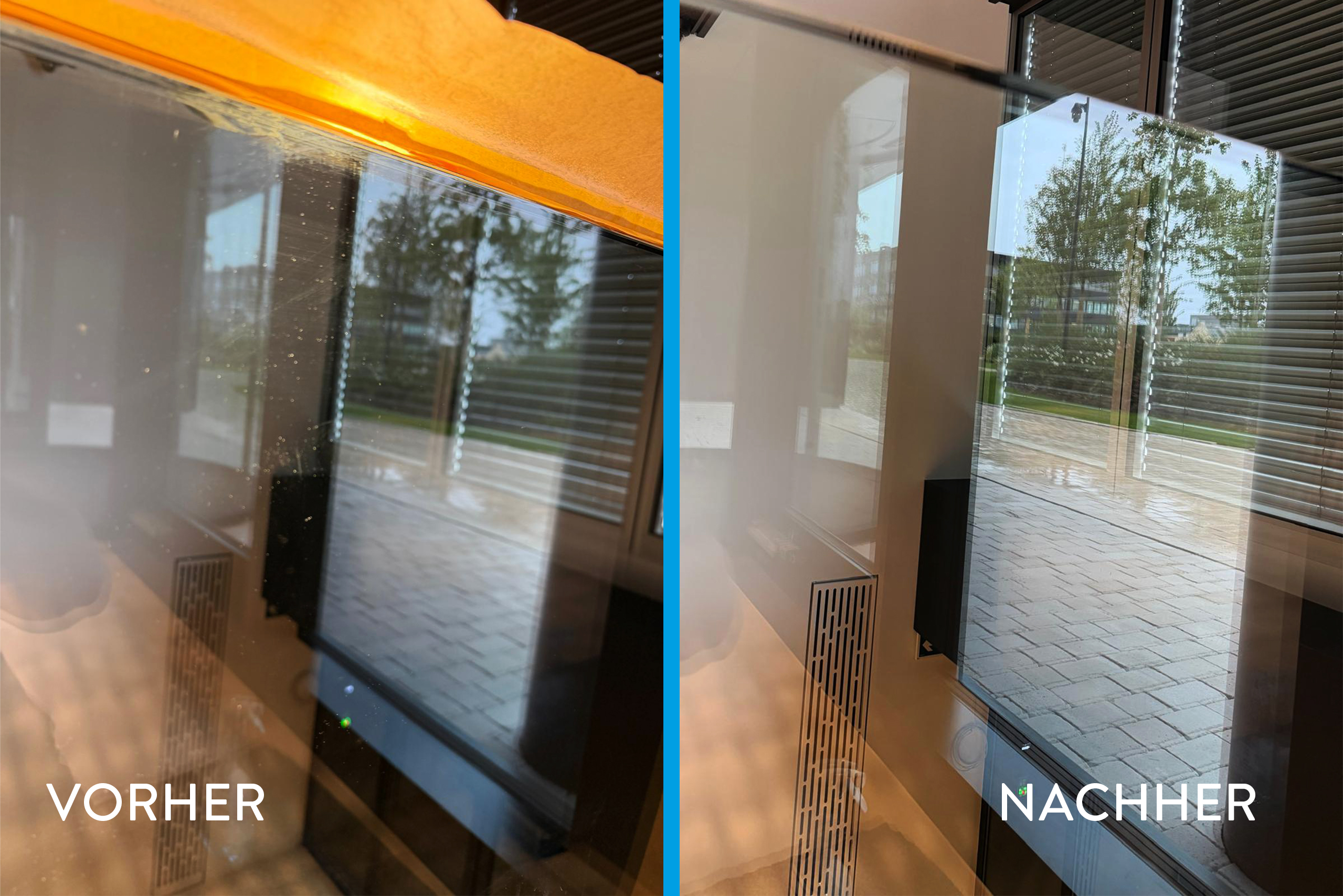
  • Fine Polishing: In a specialized grinding and polishing process, the affected glass layer is gently removed. The pane is restored to deep clarity and regains its original light refraction.

Preserving Value for Property Managers and Owners

This issue is particularly relevant for property managers in Switzerland. A “blind” shop window or dull windows in a luxury penthouse constitutes a defect that can limit rental potential. We offer tailor made solutions across Switzerland, from a single test panel to complete facade restoration.

Clear Vision Is a Matter of Technique

Etched or damaged glass is no reason to despair. With the right techniques, almost any pane can be restored, as long as the material hasn’t been compromised by deep cracks.

Have your glass surfaces lost their shine? Let us perform a free trial restoration on a test panel. You’ll be amazed at how we can turn “blind” glass back into a clear showcase for your building.

Contact the specialists at GLASSRESQ – we save your glass.

Sparks on Glass: When Metal Particles Ruin the Facade

Sparks on Glass: When Metal Particles Ruin the Facade

It often happens during locksmith work or the installation of railings: a worker uses an angle grinder or welds a seam while the adjacent glass facades are inadequately protected. The glowing metal particles, reaching up to 1,200 °C, strike the cool glass surface at high speed. What initially looks like tiny black dust is, in fact, a catastrophe for the glass: the particles burn deep into the surface and fuse with the material.

This so-called “pitting” can no longer be wiped away. Anyone attempting to clean it risks deep scratches from the sharp metal inclusions. For construction managers and architects in Switzerland, this used to mean a total loss of the pane. But at Polygon Smart Repair, we have developed a way with GLASSRESQ to solve this problem without the costly replacement.

Why Replacement Is Often the Worst Solution

Especially for large storefront windows or façade elements in cities like Zurich or Geneva, a replacement can be a nightmare: street closures, crane rentals, long lead times for specialty glass, and the risk of damaging surrounding insulation.

Our experts, on the other hand, arrive with mobile equipment. Whether at our headquarters in Wädenswil or on a construction site in Ticino, we perform the restoration directly on-site.

The GLASSRESQ Process: Millimeter-Precision on Glass

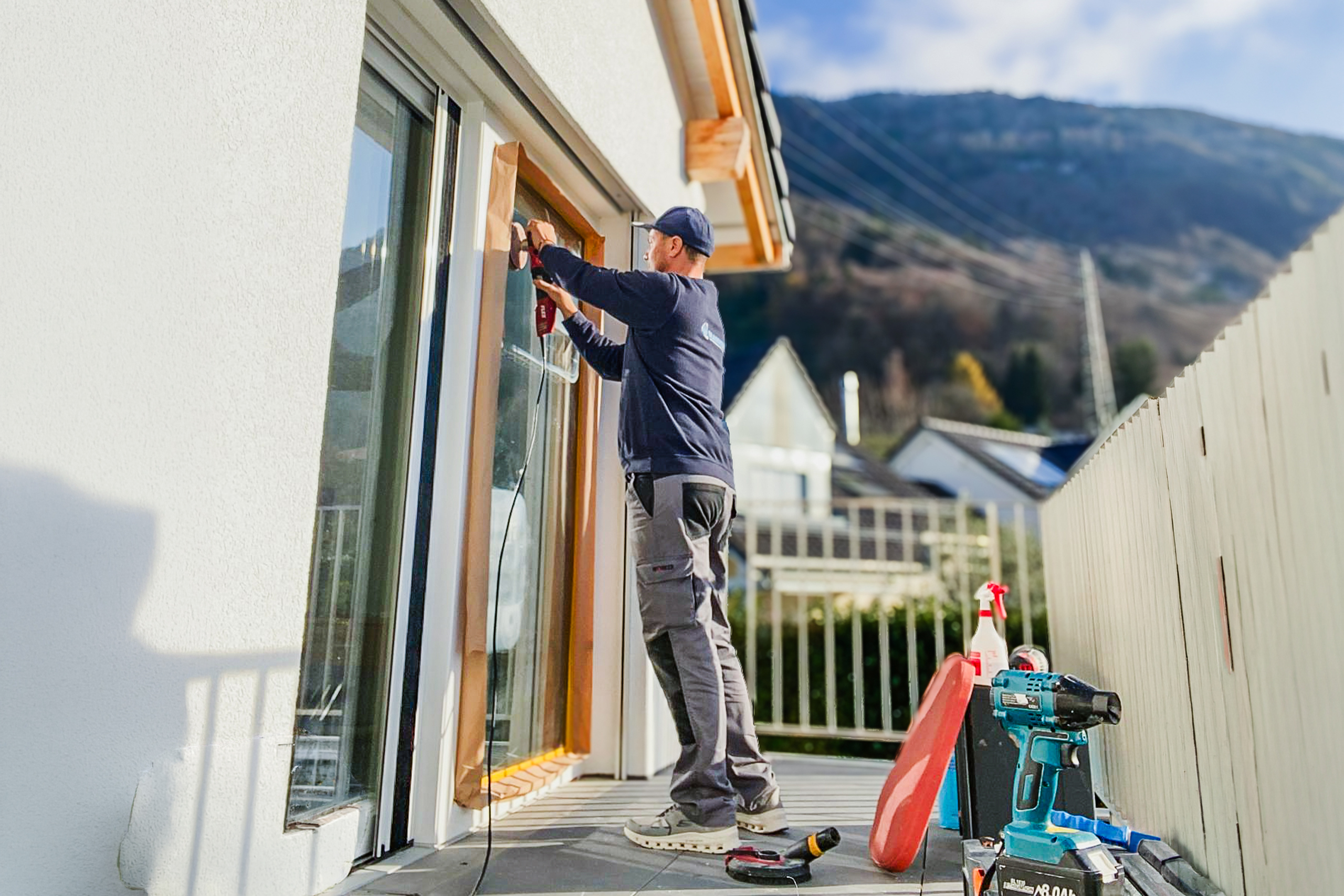
Our technicians mechanically remove every single metal particle. The top layer of the glass is precisely abraded and then polished in multiple stages so that no optical distortions (lensing) occur.

    • Safety: The structural properties of the glass remain intact.

    • Appearance: The pane regains its original transparency and brilliance.

    • Efficiency: We often work alongside ongoing construction activities without disrupting other trades.

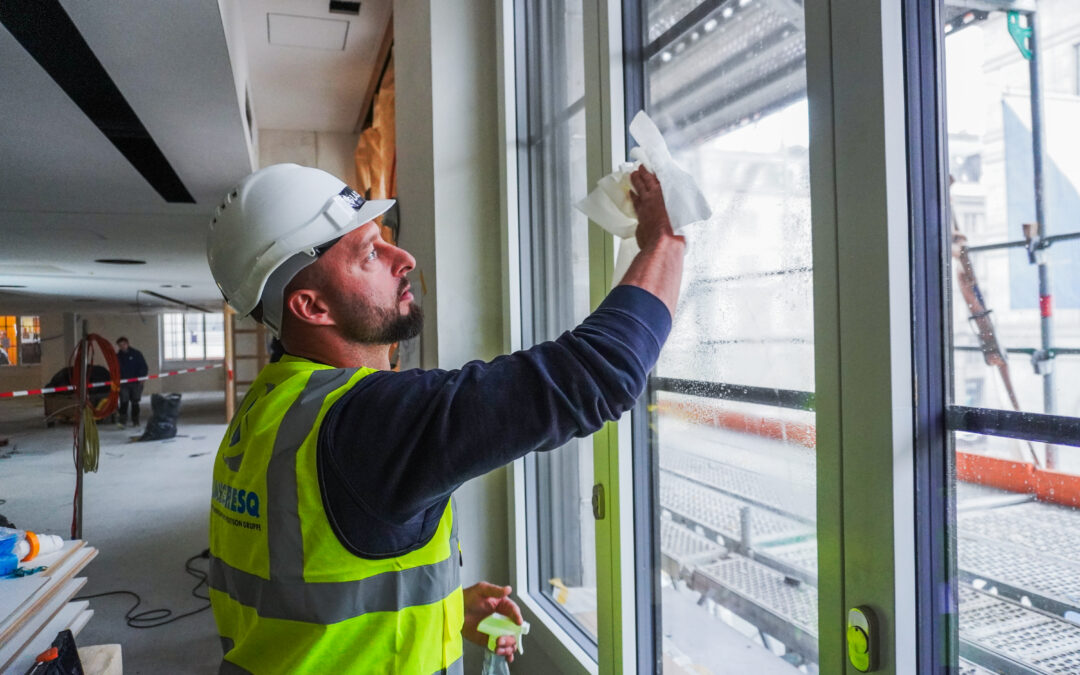
GLASSRESQ-Techniker entfernt Metallspritzer mechanisch vom Glas – präzise Sanierung ohne Austausch

A Clear Advantage for the Construction Budget

A restoration by our specialists usually costs only a fraction of a glass replacement. In addition, the ecological footprint of producing new glass is avoided. Across Switzerland, insurers and general contractors appreciate this resource-saving and fast intervention option.

Metal Impacts Are Not a Total Loss

Before signing a contract for new glazing, let us assess the damage. We restore glass surfaces that others have already given up on.

Have you noticed “burned-in” sparks on your panes? Call us. We conduct a technical evaluation and show you how we can return your façade to its original condition without a major construction project.

Contact the specialists at GLASSRESQ – we save your glass.

Checklist for Site Managers: Systematically Inspect Glass Surfaces Before Acceptance

Checklist for Site Managers: Systematically Inspect Glass Surfaces Before Acceptance

The final weeks before project handover are often the most intense. While the various trades are pushing toward completion, you as the site manager must ensure that every detail meets the agreed quality standards. Glass is a particularly challenging material in this context: it is one of the most expensive building components and, at the same time, highly susceptible to damage during the final cleaning phase. Nothing is more frustrating than a complaint from the client after the invoices have already been paid.

To help you navigate this critical phase, we at Polygon Smart Repair have compiled a guide. It will help you inspect glass surfaces efficiently and with professional expertise.

The physics of perception: When is a defect actually a defect?

Before you reach for the checklist, the environment is crucial. Glass should never be evaluated in direct sunlight, as reflections can make many defects invisible. Ideally, assessment should take place in diffuse daylight or under an overcast sky. According to SIA standards, inspection is carried out from a distance of approximately 2 to 3 meters at a perpendicular viewing angle.

Your 5-point on-site checklist

  • Maintain the correct viewing distance
    Inspect the panes systematically from top to bottom. What is not visible from a distance of 3 meters under normal room lighting is often not considered a defect. However, be aware: in high-end projects, client expectations are often higher than the standard—this is where good judgment is required.
  • Identify mechanical damage
    Look for scratches, scuffs, or point-like “pitting” (impact marks). If in doubt, use a flashlight and move it at a shallow angle across the surface (raking light) to make irregularities visible.
  • Assess residues
    Are they merely stains, or are they “burnt-in” particles? Cement haze or metal splashes from grinding cannot simply be wiped off—they require chemical or mechanical specialist treatment.
  • Inspect edges and perimeter areas
    Check the edges for shell-like chips. These can create thermal stress and may later lead to spontaneous glass breakage. This represents a significant risk during the warranty period.
  • Documentation without adhesive residues
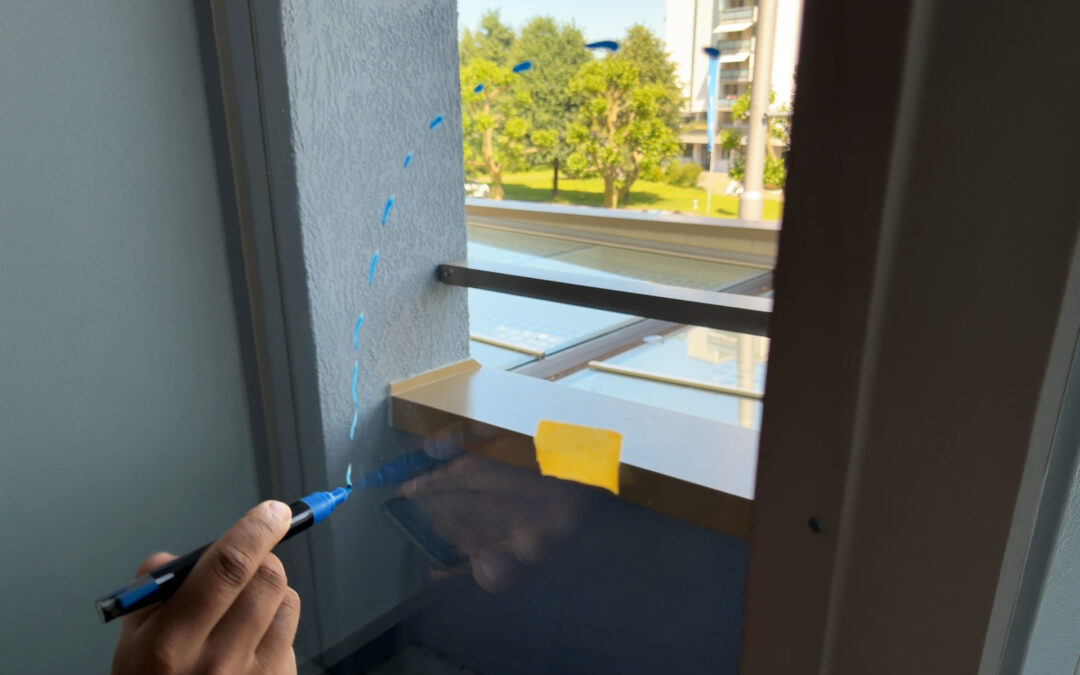
    Never mark defects directly on the glass using aggressive adhesive tape or permanent markers. Residues can become permanently embedded due to UV exposure. Instead, take photos with a reference object (e.g., a coin) and record the position on the floor plan.

If you find issues: Polygon is your backup

Have you documented scratches or etching? Then it’s time to act quickly. As Switzerland’s market leader in glass surface restoration, GLASSRESQ specializes in repairing exactly these types of defects on site.

From our headquarters in Wädenswil, we deploy experts to all cantons to help save your project handover. In many cases, we can carry out repairs at short notice so that tenants are welcomed with perfectly flawless glass upon move-in.

System beats chance

Those who inspect glass surfaces using a structured approach identify defects before they turn into costly disputes. Timely restoration is always more economical than a full replacement under time pressure.

Do you need a professional assessment of glass damage?
Send us a photo or give us a call. We support site managers across Switzerland in delivering uncompromising quality.

Contact the specialists at GLASSRESQ – we save your glass.


Scratches Caused by Contractors – Who Is Liable and What Is the Solution?

Scratches Caused by Contractors – Who Is Liable and What Is the Solution?

Imagine the scaffolding at your new construction project is finally being dismantled. For the first time, light streams unobstructed through the large glass façades, and then you notice it: fine sanding marks left by the plasterer, scratches caused during cleaning, or stubborn splashes that were carelessly removed. The shock runs deep, as the final inspection is just around the corner. Who is now responsible? And does the pane really have to be laboriously replaced?

On construction sites across Switzerland, from St. Gallen to Geneva, this is one of the most sensitive issues. Contractors work under time pressure, and glass is a delicate material. However, today a scratch no longer automatically means that the entire window sash has to be replaced.

The Liability Trap: A Problem for Site Managers and Contractors

It is often difficult to prove who caused the scratch. Was it the plasterer while finishing the reveal? The painter during masking? Or the construction cleaning crew using an improper blade? In most cases, this leads to lengthy discussions between trades, delays in the schedule, and stress with the client.

This is where we come in at Polygon Smart Repair. With our GLASSRESQ brand, we offer a solution that defuses the conflict: we restore the surface so precisely that no replacement is necessary. This not only saves money, but also protects the nerves of everyone involved.

Polishing Instead of Replacing: The Gentle Revolution

Replacing a large fixed glazing unit is a major logistical effort: crane rental, suction lifters, a new pane, disposal of the old one – all while follow-up works are still ongoing. Our technique is different. Our mobile teams come directly to your construction site.

With the patented GLASSRESQ process, we grind and polish the damage out of the glass surface with pinpoint precision. The result? A visually flawless pane without distortion (lens effect). Whether you contact us at our headquarters in Wädenswil or have a project in another region of Switzerland, we operate nationwide.

Why GLASSRESQ is the Smarter Choice

Time savings: A restoration usually takes just a few hours, whereas the delivery time for specialty glass can take weeks.

Sustainability: We preserve the existing glass, avoiding unnecessary waste and CO₂ emissions from production and transport.

Cost: In most cases, restoration is up to 80% cheaper than a full replacement.

Document and Act

Don’t let scratches dictate the completion of your project. The first step should always be a professional assessment. We will inspect the site to determine whether restoration is technically feasible – which is the case in over 90% of situations.

Have you discovered scratches on your construction site? Don’t hesitate. Call us for a non-binding damage assessment. We help you complete your project handover without costly delays or disputes.

Contact the specialists at GLASSRESQ – we save your glass.

Swissbau Basel 2026 – Repair Instead of Replace as a Best Practice

Swissbau Basel 2026 – Repair Instead of Replace as a Best Practice

A post-event report by Dominic Duer, CEO of GLASSRESQ

Practical, hands-on trade fair presence by GLASSRESQ and SMARTRESQ

Swissbau 2026 in Basel was a complete success for GLASSRESQ and SMARTRESQ. Not because of flashy presentations or high-gloss staging, but because of substance. Because of real conversations. Because of visibly functioning craftsmanship. And because of a clear signal from the market: repairing instead of replacing is no longer a niche topic, but a serious solution for property owners, planners, contractors, and facility managers.

Our trade fair presence was deliberately designed to be practical. No abstract promises, no renderings, no theoretical sustainability claims. We demonstrated live what is possible. Glass, metal, wood, PVC. Scratches, sparks, etching damage, pressure marks, surface defects. Damage that occurs in everyday construction projects and often triggers reflexive replacement. This is exactly where we step in.

On-site repairs in action

Throughout the entire trade fair, we carried out repairs directly on site. Visible. Understandable. No cuts. No tricks. Visitors were able to follow the complete process: from the damaged component to a technically and visually flawless result. The reactions were clear: surprise. Interest. Skepticism that turned into approval. Many conversations began with the question of whether it would really hold. They ended with concrete project examples and verifiable figures.


Visitor reactions and market response

What stood out in particular: the audience was prepared. Architects, construction managers, investors, facility managers. They no longer asked whether repairs were possible, but when they are more sensible than replacement. This shift is crucial. Cost-efficiency, time savings, and sustainability are no longer considered separately—they are interconnected.


GLASSRESQ and SMARTRESQ – Solutions for Existing Buildings

GLASSRESQ stands for industrial-level glass and surface restoration. Our methods are developed for real construction site conditions, not laboratory environments. Low-dust. Efficient. Reproducible. In many cases up to 90 percent cheaper than replacement. Above all: immediately available. No waiting for new parts, no supply chain delays, no downtime.

SMARTRESQ consistently complements this approach. Window and door profiles made of aluminum, steel, wood, or PVC can be restored without dismantling the frame. This is a decisive advantage, especially in existing buildings. Preservation instead of demolition. Repair instead of disposal. This approach is technically sophisticated and economically proven.

High visitor engagement and hands-on raffle

Interest in our booth was consistently high—not just at specific times, but throughout all trade fair days. Many visitors returned deliberately, brought colleagues, and asked detailed questions. This shows that the topic generated not only curiosity but genuine relevance. Particularly noticeable was the strong response from the sectors of building refurbishment, hospitality, public buildings, and high-end residential projects.

Another focus was our raffle, which we deliberately did not treat as a pure marketing tool. Participation numbers were high, and the feedback was concrete. The prizes have since been sent to the winners. What mattered most was not the incentive, but the exchange that resulted: contacts that endure, conversations that continue.

Sustainability, Cost-Efficiency, and Market Development

Swissbau reflects the industry. What is discussed there translates directly to the market. This year, it was clear that the concept of sustainability has gained more precision: less symbolism, more practical implementation. Fewer declarations of intent, more operational solutions. Restoration fits perfectly into this development. It saves resources, reduces CO₂, shortens construction times, and lowers costs. Not theoretical, but measurable.

As CEO, I see this development not as a trend, but as a necessary correction. The reflexive replacement of components is neither economically nor ecologically up to date. Repair is not a compromise, but a qualified technical decision. It requires know-how, experience, and a clear standard of quality. This is exactly what GLASSRESQ stands for.

Restoration Becomes the Standard

My personal conclusion from Swissbau 2026 is clear: the industry is further along than its reputation suggests. The willingness to explore new approaches is there. What is often missing are reliable examples. We provide these examples every day. On construction sites. In existing buildings. Under real conditions.

I am convinced that the focus will continue to shift. Repair instead of replacement will not only be accepted but expected—not as an exception, but as the standard. We will actively shape this development. With craftsmanship. With technology. With responsibility.

Swissbau 2026 has shown that this is the right path.

Many thanks to everyone who visited us.
Yours,
Dominic Duer